
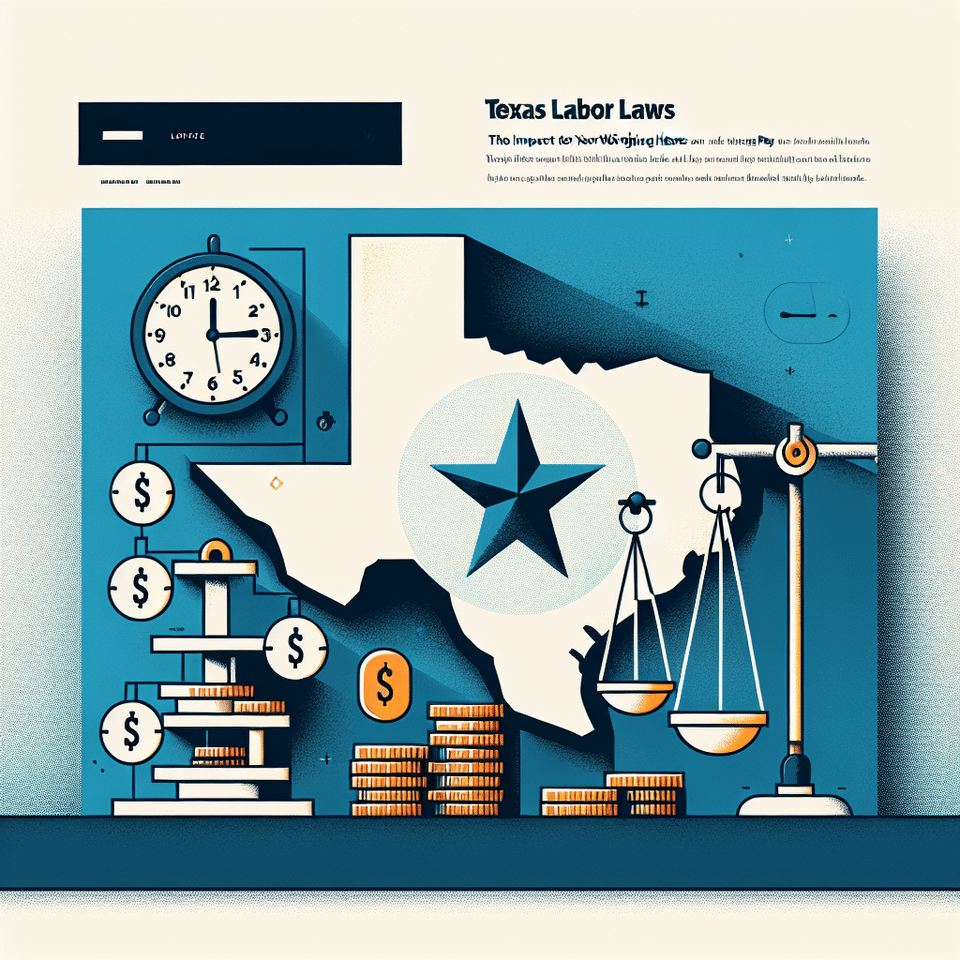

As the Lone Star State blazes its own trail through the American labor landscape, understanding Texas labor laws is crucial for both employers and employees. The intricate dance between working hours and overtime pay in Texas is a tale of regional autonomy, with a unique set of rules that impact the daily lives of millions. Let's delve into the historical tapestry that has shaped current regulations and explore how these laws affect your paycheck today.
The Roots of Texas Labor Laws
The history of labor laws in Texas is as rich and varied as the state itself. From its early days as an independent republic to its current status as an economic powerhouse, Texas has always prided itself on a business-friendly environment. This ethos is reflected in its approach to regulation, which tends to favor employer flexibility over stringent worker protections. However, this hasn't always been the case—there was a time when Texan workers fought vigorously for their rights.
Trends in Texas Minimum Wage Over the Years
During the early 20th century, industrialization brought forth labor movements across the nation, including Texas. These movements laid down the groundwork for some of the basic protections workers enjoy today. Yet, despite these advances, Texas remains one of many states that align with federal standards rather than setting more stringent state-specific labor laws.
Understanding Your Working Hours
In Texas, as in many other states, there is a standard workweek—40 hours over five days—which serves as a benchmark for full-time employment. But what happens when you exceed this threshold? Here lies the distinction between "non-exempt" and "exempt" employees—a classification that determines eligibility for overtime pay under both federal and U.S. overtime law.
Non-exempt workers are entitled to overtime pay at a rate of one and a half times their regular hourly wage for every hour worked beyond 40 in a workweek. On the other hand, exempt employees are typically salaried professionals who are not eligible for overtime pay due to their job duties and salary level meeting certain criteria established by the Fair Labor Standards Act (FLSA).
Overtime Pay: A Closer Look at Non-Exempt Employees
Overtime pay is where we see significant differences in how employees are compensated for their extra hours. In some states, there are nuances such as daily overtime or double time pay; however, Texas sticks closely to federal guidelines. This means that unless an employee falls under specific exemptions or exceptions outlined by federal law, they should be compensated at one and a half times their standard rate after 40 hours of work per week.
This straightforward approach can be both a blessing and a curse—it simplifies payroll calculations but may also limit potential earnings for hardworking Texans. As we navigate this terrain, it's essential to recognize that not all industries adhere strictly to these rules; some have carved out their own paths through collective bargaining agreements or company-specific policies.
Are You Eligible for Overtime Pay in Texas?
Understanding your rights under Texas labor laws is crucial for ensuring you are properly compensated for your work. This quiz will help you determine if you are eligible for overtime pay according to Texas regulations.
In conclusion—well, actually let's not conclude just yet! We've only begun to scratch the surface of how labor laws influence working on Sundays, mandatory breaks during shifts, or even how being employed by an out-of-state company might affect your rights under interstate employment laws. As we continue our exploration into Texas labor laws' impact on working hours and overtime pay, keep these foundational elements in mind—they serve as stepping stones towards understanding your entitlements within this robust legal framework.
As the sun sets over the Lone Star State, the topic of overtime pay often ignites as fiercely as a Texas barbecue. It's a hot issue that affects countless workers, yet it remains shrouded in complexities that can befuddle even the most diligent employee. In Texas, overtime is calculated for any work over 40 hours per week, at a rate of one and a half times the regular pay. But what does this mean for you, the worker, when the clock ticks past your eighth hour of toil?
The Overtime Pay Puzzle: Understanding Your Rights
In an era where every minute counts, understanding your entitlement to overtime pay is crucial. The Fair Labor Standards Act (FLSA) sets the stage for overtime, but Texas labor laws play their part too. For non-exempt employees in Texas—those not exempt from overtime pay due to their job type or salary level—the FLSA's rules are clear: 1.5 times your standard rate for each hour over 40.
However, there are nuances to consider. Some employers may attempt to offer 'comp time'—paid time off in lieu of overtime pay—which is generally not permissible in the private sector. This practice is often a misstep that can lead to litigation and underscores why knowledge is power in the realm of labor laws. To navigate these waters with confidence, familiarize yourself with both Texas labor laws and federal guidelines.
Exemptions and Exceptions: Not All Hours Are Created Equal
The concept of 'exempt' versus 'non-exempt' status can be as tangled as a rodeo lasso. Certain job categories—executive, administrative, professional, outside sales employees, and some computer employees—may fall into exempt classifications if they meet specific criteria regarding their job duties and compensation levels.
If you're unsure about your classification or believe there might be an error—a not uncommon scenario—it's imperative to seek clarification. An incorrect exemption status can mean missing out on substantial earnings. Moreover, those who find themselves working across state lines face additional layers of complexity; understanding whether California's or Texas's labor laws apply can be pivotal.
The Role of Breaks and Meal Periods in Working Hours
Amidst discussions about hours and wages lies another critical aspect: breaks and meal periods. Unlike some states that mandate meal or rest breaks after certain hours worked, Texas does not require employers to provide them. However, if an employer chooses to offer short breaks (usually lasting about 5-20 minutes), federal law dictates they must be paid.
This absence of regulation around breaks may seem like an oversight but reflects a broader Texan ethos valuing employer discretion over governmental mandates—a theme consistent across many aspects of state labor law variations. Nonetheless, workers should be vigilant about how these breaks are implemented and compensated.
In scrutinizing our working hours through the lens of history and regulation, we gain insight into how our labor system has evolved—and where it still falters. It's essential not only to understand these laws but also to engage with them critically; after all, they dictate much more than just when our day ends—they shape our livelihoods and well-being.
Comparative Analysis of Required Breaks by State
To further explore this topic or test your knowledge on interstate employment laws with our interactive content such as quizzes, delve into our resources designed for workers from Florida to Nevada—and everywhere in between.
We must remember that while each state has its own set of rules like Florida's labor laws, they all dance around the same federal tune played by the FLSA—an act that has been both hailed as a protector of workers' rights and criticized as outdated by various parties (see more on this at Overtime Law Controversies). As we continue on our daily grind under the vast Texan skies—or anywhere else across this diverse nation—we must keep stride with these ever-changing regulations to ensure that we're not only working hard but also working smart.
To wrap up your understanding on compensation for extra workdays such as Sundays—which carry their own set of rules—visit our page dedicated to U.S. Labor Laws Regarding Working on Sundays. And if you've experienced an injury at work in Texas and are curious about potential settlements, don't miss our overview on workers' comp settlements in Texas.
By staying informed and proactive about your rights under Texas labor laws—and beyond—you empower yourself not just as an employee but as an active participant in shaping fair work practices for generations to come.
No comments yet. Be the first to share your thoughts!