

Florida Workers’ Comp: A Quick Look
Florida's workers' compensation system provides benefits to employees with job-related injuries or illnesses. It's a no-fault system, so benefits are generally available regardless of who caused the injury. You don't have to prove employer negligence to get coverage.
Workers' comp generally covers necessary medical expenses, lost wages during recovery, and benefits for permanent impairments. The aim is to help you recover financially and, if possible, return to work.
Most Florida employers with four or more employees must carry workers' compensation insurance, with exceptions for some construction and agricultural operations. Independent contractors are generally not covered.
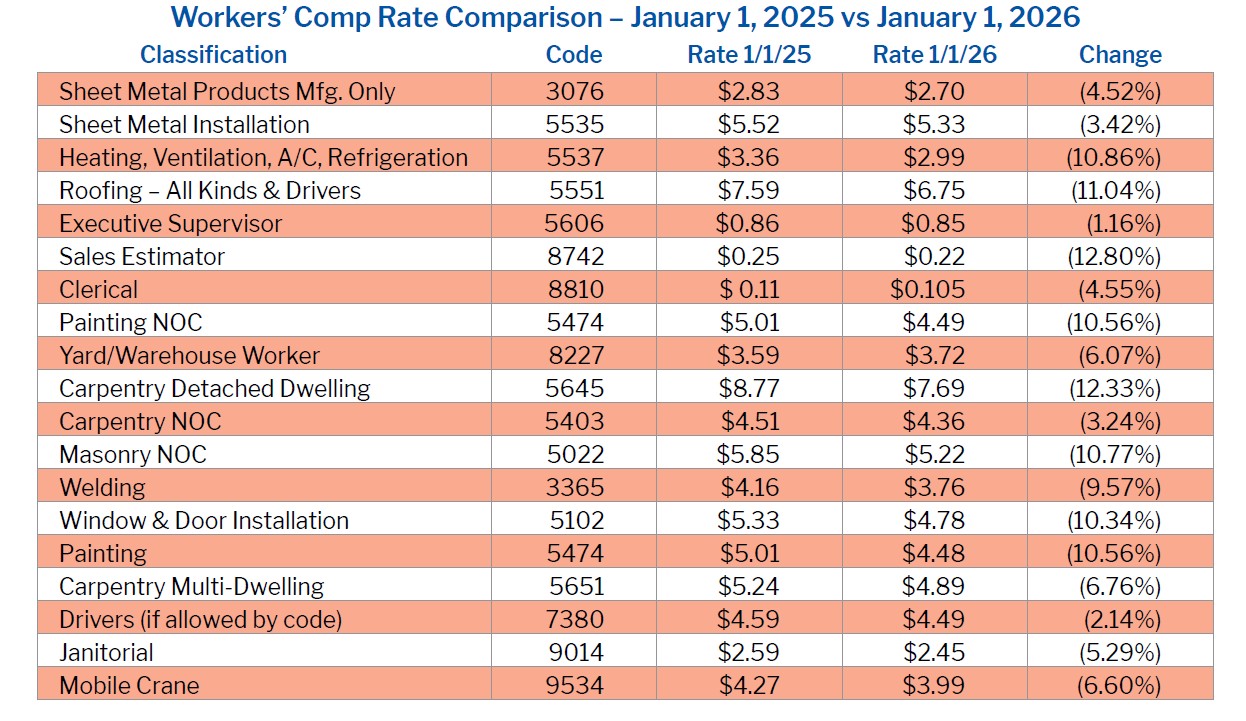
2026 Settlement Trends: What’s Changing?
Recent data suggests trends for Florida workers' compensation settlements in 2026. According to the Florida Workers’ Advocates (FWA), settlements involving their members consistently outperform the statewide average.
The FWA’s "Measurable Edge" report (2023-2024) shows attorneys affiliated with the FWA secured higher settlements for their clients. Legal representation can make a difference in case outcomes by maximizing entitled benefits.
As of late 2024, no major legislative changes are slated for 2026 that are expected to drastically alter settlement amounts. Florida's political climate can change, so staying informed is advisable. Developments impacting workers' comp settlements will be monitored.
- FWA member settlements consistently outperform statewide averages.
- Legal representation can significantly impact settlement outcomes.
- No major legislative changes are currently anticipated for 2026.
Florida Workers' Compensation Settlement Trends: 2020-2026 (Projected)
| Year | Legislative Changes | Economic Conditions | Court Rulings | Overall Settlement Trend |
|---|---|---|---|---|
| 2020 | Relatively stable legislative environment. | Initial economic disruption due to COVID-19 pandemic. | Continued focus on pre-existing condition defenses. | Stable, with a slight decrease in average settlement values initially due to economic uncertainty. |
| 2021 | No major legislative changes impacting settlement values. | Economic recovery began, but supply chain issues persisted. | Case law continued to refine interpretations of maximum medical improvement (MMI). | Slightly Increasing, as economic conditions improved and backlogs from 2020 were addressed. |
| 2022 | Minor adjustments to attorney fee schedules were debated but not enacted. | Continued economic recovery, with increasing inflation. | Focus on independent medical examinations (IMEs) and their role in determining MMI. | Increasing, driven by rising medical costs and a more favorable economic climate for claimants. |
| 2023 | Legislative focus on controlling medical costs within the workers' compensation system. | Inflation remained a significant factor, impacting benefit levels. | Court decisions addressed challenges to IME reports and their admissibility. | Stable to Slightly Increasing. Cost control measures offset some of the inflationary pressures. |
| 2024 | Continued scrutiny of medical fee schedules and utilization review processes. | Moderate economic growth, but with ongoing concerns about a potential recession. | Court rulings emphasized the importance of clear and convincing evidence in denying claims. | Stable. The impact of legislative changes and economic conditions largely balanced each other out. |
| Projected 2026 | Potential for further legislative efforts to address rising costs and maintain employer affordability. | Economic outlook remains uncertain, with potential for recession or continued moderate growth. | Anticipated continued focus on MMI and the role of IMEs in claim resolution. | Potentially Stable to Slightly Decreasing. Dependent on the overall economic climate and any significant legislative changes. Current trends suggest a continued emphasis on cost containment. |
Illustrative comparison based on the article research brief. Verify current pricing, limits, and product details in the official docs before relying on it.
Average Payouts by Injury Type
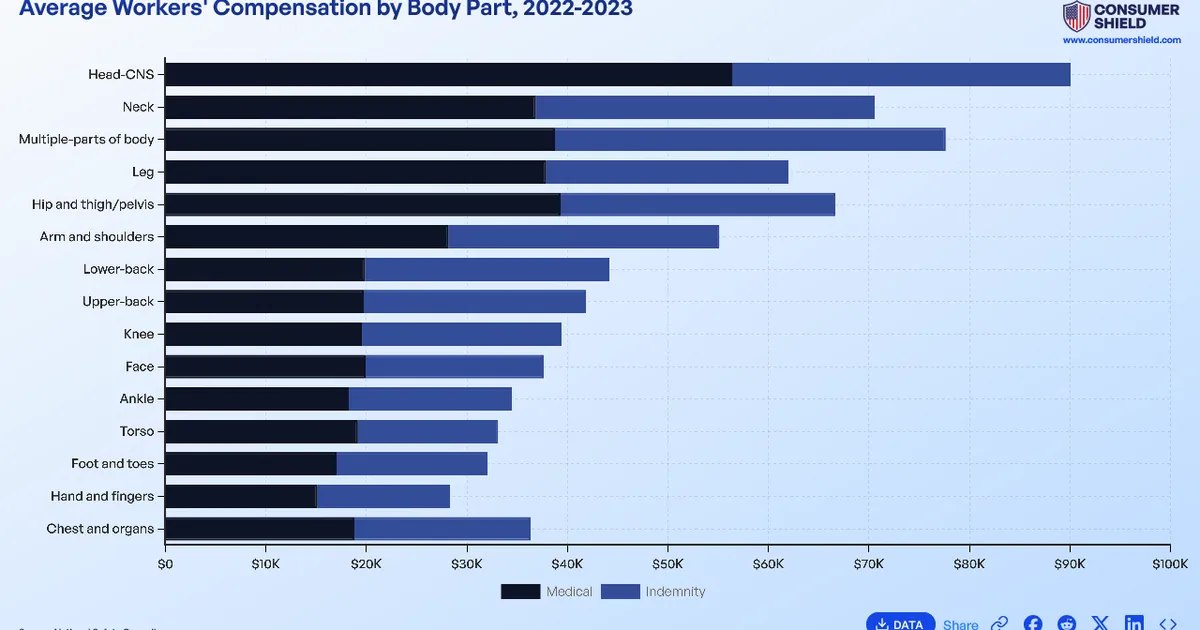
Average payouts are complicated by unique case factors like injury severity, employee occupation, and claim specifics. The following are general ranges based on common injury types; individual settlements may vary.
Back injuries are common workers' comp claims. A simple muscle strain might settle for $5,000 to $15,000, while a herniated disc requiring surgery could range from $20,000 to $50,000 or more. Fractures typically fall on the higher end of this scale.
Carpal tunnel syndrome settlements vary widely based on nerve damage severity and surgical needs. Mild cases might settle for $3,000 to $8,000, while severe cases requiring surgery could reach $15,000 to $30,000. Proving a direct work link can impact the payout.
Slip and fall injuries can range from minor bruises to broken bones and head trauma. Settlements typically range from $2,000 to $25,000, depending on injury extent and proven negligence.
Other common injuries and approximate settlement ranges include: shoulder injuries ($5,000 - $20,000), knee injuries ($4,000 - $18,000), and head injuries (highly variable, $5,000 to $100,000+ depending on severity). Document everything and seek medical attention immediately.
Permanent Impairment Ratings & Payouts
Florida evaluates permanent impairments using the American Medical Association (AMA) Guides to the Evaluation of Permanent Impairment. This system assigns a numerical rating (percentage) for permanent loss of function. The AMA Guides are detailed and open to interpretation.
A permanent impairment rating is multiplied by a factor based on the injury's nature. Florida uses a multiplier that varies by body part; for example, the multiplier for a spine impairment is generally higher than for an arm or leg impairment.
The multiplier is applied to the employee's average weekly wage (AWW) to calculate the permanent impairment benefit's monetary value. As of late 2024, multipliers are detailed in Florida Statute 440.15 and are subject to change. Maximum benefit amounts are adjusted annually.
Navigating Medical Expenses
Florida workers' compensation covers reasonable and necessary medical expenses for work-related injuries, including doctor visits, hospital stays, physical therapy, prescription medications, and medical equipment. Coverage is broad but not unlimited.
Pre-existing conditions can complicate claims. Workers' comp generally covers the aggravation of a pre-existing condition caused by a work injury, but not the underlying condition itself. Strong medical evidence is often required to prove the connection.
If treatment is denied, you can appeal by filing a petition for benefits with the Division of Workers' Compensation. An attorney can assist with this complex and time-consuming process. Authorized treating physicians guide care and provide medical opinions.
Lost Wage Benefits Explained
Lost wage benefits in Florida partially replace income lost due to a work-related injury. There is a seven-day waiting period before benefits begin, meaning the first week out of work is unpaid.
The maximum weekly benefit amount is capped and adjusted annually. As of late 2024, it is approximately $971 per week, though this figure can change. Benefits are calculated as two-thirds of your average weekly wage (AWW), up to the maximum cap.
Two main types of lost wage benefits exist: Temporary Total Disability (TTD) for when you are completely unable to work, and Temporary Partial Disability (TPD) for when you can return to work in a limited capacity at a reduced wage.
Legal Representation: Is It Worth It?
Hiring an attorney is a personal decision. Some workers' comp claims are straightforward and can be handled without legal assistance. However, if your claim is denied, you have a complex injury, or you are unsure of your rights, an attorney can be invaluable.
Attorneys typically charge a contingency fee, meaning they are paid only if they win your case. The standard fee in Florida is 15% of the settlement amount, though it can vary. An attorney can often secure a larger settlement than you might receive on your own.
The Florida Workers’ Advocates (floridaworkers.org) is a good resource for finding qualified workers' compensation attorneys in your area. They specialize in representing injured workers and have a proven track record of success.
Resources for Injured Workers
If you’ve been injured at work in Florida, there are several resources available to help. The Florida Division of Workers' Compensation website (myfloridacfo.com) provides information on the workers' compensation system and how to file a claim. The Florida Bar also offers a lawyer referral service.
Legal aid organizations may be able to provide free or low-cost legal assistance to eligible individuals. Don’t hesitate to reach out for help if you’re struggling to navigate the workers' compensation process. Knowing your rights and having support can make a significant difference.
No comments yet. Be the first to share your thoughts!