

How settlements work in 2026
A workers' compensation settlement is a voluntary agreement that resolves your claim for past and future benefits. You are not required to accept an offer from your insurer, but doing so closes your claim permanently. Once you sign, you generally cannot return for additional benefits even if your condition worsens. This finality is the most critical aspect of any settlement negotiation.
Settlements typically cover two main areas: medical expenses and wage loss. In 2026, most cases end in structured settlements, such as a lump sum payment or weekly payments for a pre-determined period. The value of your claim depends heavily on your Medical Milestone Index (MMI) and Impairment Rating. MMI marks the point where your injury has stabilized and no further improvement is expected. Your Impairment Rating then quantifies the permanent damage, serving as the primary driver for calculating your payout.
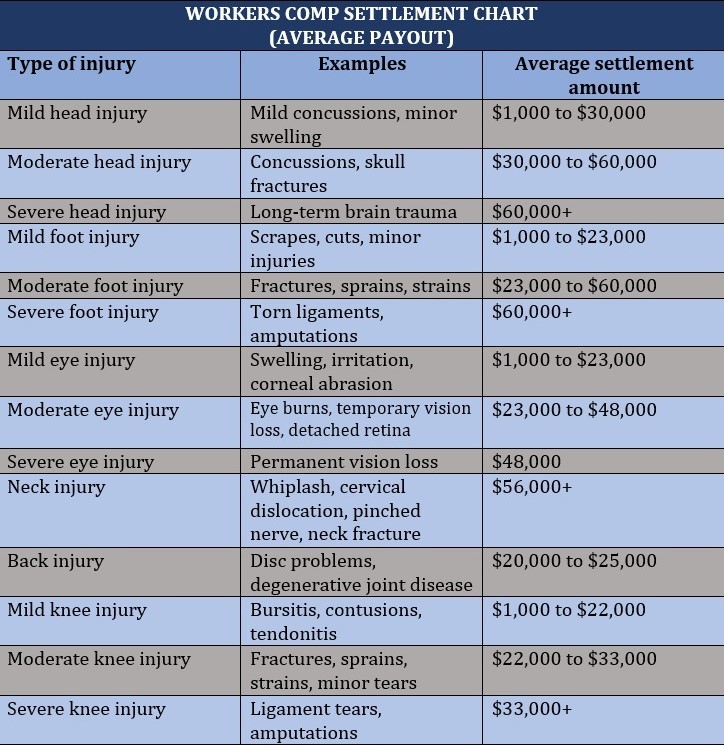
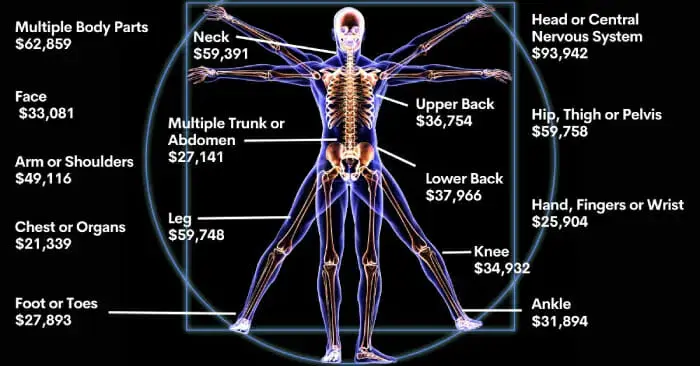
While the average settlement often falls between $2,000 and $40,000, serious cases involving long-term treatment or permanent disability can reach much higher figures. Understanding these components helps you evaluate whether an offer fairly accounts for your future medical needs and lost earning capacity.
Calculate your estimated settlement value
Use this tool to estimate your potential workers' compensation settlement range based on your specific injury details and state laws. This calculator provides a rough estimate for informational purposes only and does not constitute legal advice. Actual settlement values vary significantly based on fault, insurance company negotiations, and local regulations.
This estimate factors in your weekly wages, incurred medical bills, and disability rating. Keep in mind that settlements often include compensation for future medical care and lost earning capacity, which this simple model approximates. For a precise valuation, consult a qualified workers' compensation attorney in your state.
Florida settlement rules and limits
Florida operates under a strict no-fault system where the state’s statutory caps dictate the ceiling of your payout. Unlike other states that may offer more flexibility, Florida law imposes rigid boundaries on how long you can receive benefits and how those benefits are calculated. Understanding these specific limits is essential before accepting any offer, as the insurance carrier will rely on your lack of knowledge to minimize the settlement value.
The 104-Week Cap on Temporary Disability
The most significant constraint in Florida is the limit on Temporary Total Disability (TTD) benefits. If your doctor places you out of work entirely while you heal, you can receive two-thirds of your average weekly wage, but this payments stop after 104 weeks. This cap applies regardless of whether you have fully recovered or if you are still in significant pain. Once this 104-week period expires, your temporary benefits end, and you must transition to permanent disability status or return to work.
Judicial Approval Requirements
Florida law mandates that all workers' compensation settlements receive judicial approval. A judge must review the agreement to ensure it is fair and reasonable for the injured worker. This requirement exists to protect employees from signing away their rights for an unfairly low amount. The judge will examine the medical evidence, the age of the worker, and the potential for future medical needs before signing off on the final payout.
Understanding MMI and Impairment Ratings
To determine permanent benefits, doctors must assess your condition at "Maximum Medical Improvement" (MMI). MMI is the point where your injury has stabilized and no further significant recovery is expected. At this stage, the doctor assigns an "Impairment Rating" as a percentage. This rating reflects the permanent loss of function in your body. For example, a 10% impairment rating might translate to a specific number of weeks of permanent disability benefits, directly impacting the total value of your settlement.
Comparing Benefit Types
The value of your settlement depends heavily on which category your injury falls into. Temporary benefits cover lost wages while you heal, while permanent benefits compensate for lasting damage. The table below outlines the key differences between these two primary benefit types under Florida law.
Nevada settlement structures explained
Workers' compensation settlements in Nevada are not one-size-fits-all. The state generally offers two primary paths: a lump-sum payment that closes the case entirely, or a structured settlement that leaves the door open for future medical care. Understanding the difference is critical because it determines whether you are responsible for your own future treatment costs.
Full and final (lump-sum) settlements
A "full and final" settlement, often referred to in other jurisdictions as a Section 32 settlement, is a single payment that resolves all aspects of your claim. In exchange for this money, you sign a release agreeing not to seek any further benefits from the insurer, including future medical treatment or disability payments.
This structure is common because it provides immediate certainty. You receive a check, and the legal relationship ends. However, it carries significant risk. If your injury worsens or requires surgery you didn't anticipate, you must pay for those expenses out of pocket. There is no recourse to ask the insurance company for more money once the settlement is signed.
Structured settlements with future medicals
In contrast, a structured settlement with future medicals allows you to receive periodic payments for lost wages while keeping your medical benefits open. This option is often recommended for injuries that may require long-term care, such as chronic back issues or repetitive stress injuries.
By keeping medicals open, you ensure that necessary treatments—surgeries, physical therapy, or specialist visits—are covered by the workers' comp carrier. This is particularly important if you have not yet reached Maximum Medical Improvement (MMI), the point at which your condition stabilizes and no further significant improvement is expected. Without reaching MMI, it is difficult to accurately value the long-term impact of your injury.
Understanding impairment ratings
The value of your settlement often hinges on an "Impairment Rating," a percentage assigned by a doctor that quantifies the permanent damage to your body. For example, a 10% impairment rating on a hand might translate to a specific number of weeks of disability benefits under Nevada law.
These ratings are calculated using established medical guidelines. They do not account for pain and suffering or emotional distress, which are generally not compensable in standard workers' comp cases. Instead, they serve as a mathematical basis for calculating the permanent disability portion of your settlement.
Calculating your potential value
While every case is unique, you can estimate the baseline value of a lump-sum settlement by looking at your average weekly wage and your impairment rating. Nevada law provides specific tables for converting impairment percentages into weeks of disability benefits.
The calculator below provides a rough estimate based on these standard factors. It does not account for specific local adjustments, attorney fees, or the exact nature of your medical expenses. For a precise valuation, you should consult with a Nevada-licensed workers' compensation attorney.
Signs of a fair settlement offer
A workers' compensation insurance company can offer a settlement any time after your injury, but timing alone doesn't guarantee fairness. The most common time for an offer is after you reach Maximum Medical Improvement (MMI)—the point where your condition stabilizes and no further significant recovery is expected. Before signing, ensure the offer reflects your actual losses, not just the insurer's preference to close the file.
1. Covers all past and current medical bills
A fair settlement must fully reimburse every medical expense incurred to date. This includes emergency room visits, surgery, physical therapy, prescription medications, and medical equipment. If any past bills remain unpaid or are excluded from the settlement calculation, the offer is likely incomplete.
2. Accounts for future medical treatment (MMI)
The offer should anticipate ongoing care required after MMI. If your injury results in permanent restrictions or chronic pain, you may need future surgeries, continued therapy, or assistive devices. Insurers often undervalue these future needs; a reasonable offer explicitly allocates funds for this long-term care rather than cutting off medical benefits prematurely.
3. Reimburses lost wages and earning capacity
Your settlement should cover all wages lost during your recovery period. Beyond immediate lost wages, a fair offer accounts for "lost earning capacity"—the reduction in your ability to earn money in the future due to permanent disability. If you can no longer perform your previous job or must accept a lower-paying position, the settlement must reflect this long-term financial impact.
4. Includes fair compensation for pain and suffering
While workers' compensation systems vary by state, many settlements include a component for pain and suffering, especially if the injury is permanent. This is often tied to your Impairment Rating, a percentage assigned by a doctor indicating the severity of your permanent disability. Ensure the offer aligns with state guidelines for these ratings and doesn't arbitrarily suppress this value.
5. Relates realistically to policy limits
Finally, a fair offer should not be so low that it suggests the insurer is testing your desperation. Compare the offer to the typical settlement range for your specific injury type. Most workers receive between $2,000 and $40,000, with an average around $20,000, though serious cases can reach much higher. If your offer falls significantly below these benchmarks without clear justification, it may be worth negotiating.
Common questions about settlement value
Workers' compensation settlements vary widely based on injury severity, state laws, and future care needs. Below are answers to frequent questions about settlement ranges and what constitutes a fair offer.
No comments yet. Be the first to share your thoughts!