

Workers' Comp in 2026: What's Changing
Workers' compensation is always changing. As we move into 2026, several trends will likely affect settlement amounts. Remote work, for instance, creates new issues in determining jurisdiction and liability for injuries outside the traditional workplace. Mental health claims are also increasing, and insurers are figuring out how to evaluate and pay these complex cases.
Legislative changes are a constant factor. States are considering updates to workers' comp laws, particularly regarding medical fee schedules and permanent disability ratings. Court rulings also have a significant impact, especially on evidence admissibility or law interpretation.
Discussions on channels like Workers Comp New York on YouTube show a growing emphasis on proactive case management. Insurers are more aggressively controlling medical costs and encouraging employees to return to work quickly. This influences settlement negotiations, as insurers may offer fewer large lump-sum payments if they believe an employee can be rehabilitated.
This information comes from early 2026 trends and projections, using resources like the Workers Comp New York YouTube channel and industry reports. Workers' comp laws vary by state, and settlement amounts are fact-specific. This article offers a general overview, not legal advice from a qualified attorney.
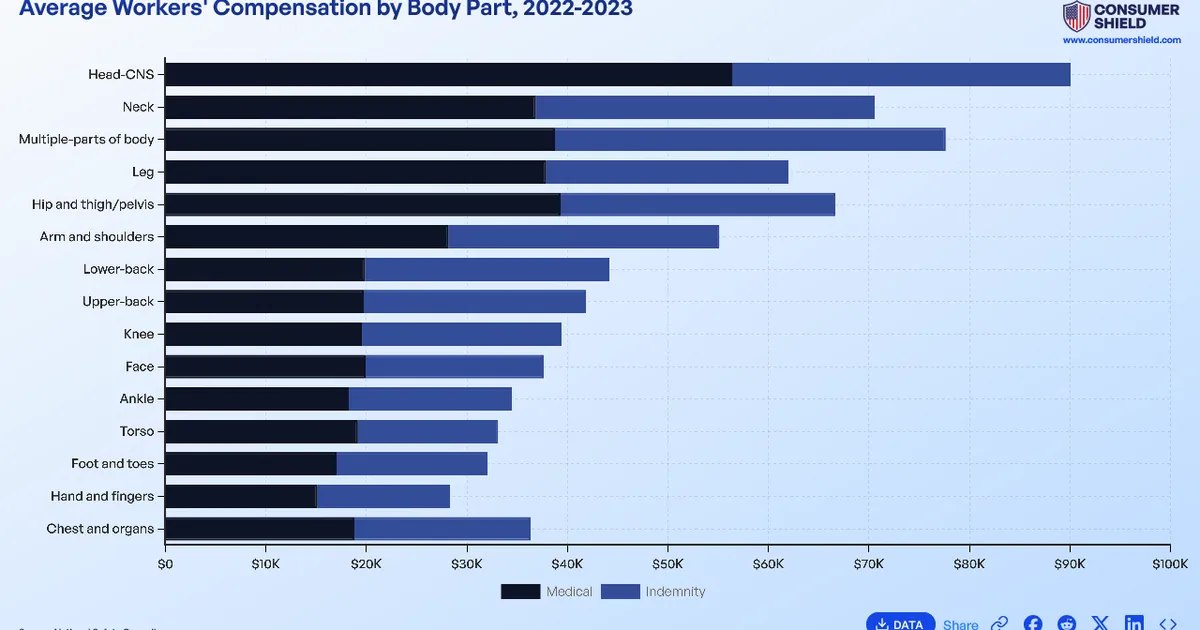
Maximum Payouts: State-by-State Breakdown
Determining maximum workers' compensation payout by state is complicated. Benefits fall into two main categories: medical and lost wage benefits. Medical benefits cover treatment costs, while lost wage benefits replace income lost due to injury. These figures are maximums – the actual settlement amount depends on your case specifics.
California consistently has some of the highest potential payouts. In 2026, the maximum weekly benefit for temporary disability is around $1,650, and the total medical treatment you can receive is effectively uncapped. Texas, on the other hand, is unique in that it doesn’t require employers to carry workers' comp insurance, and benefits are often lower for those who opt-in. Florida has a maximum weekly benefit of approximately $970, but the duration of benefits can be limited.
New York offers a maximum weekly compensation rate of around $1,169 in 2026. Pennsylvania's maximum weekly benefit is approximately $684. Illinois has a weekly maximum of $1,088. Verify the latest figures with the state's workers' compensation agency, as these numbers change.
Let’s look at a few more. In North Carolina, the maximum weekly benefit is around $1,041. Ohio's maximum weekly benefit is approximately $984. Georgia has a maximum weekly benefit of around $770. Keep in mind that these are just snapshots, and the details of how these benefits are calculated – factoring in pre-injury average weekly wage – can be complex.
Consider the difference between temporary and permanent disability benefits. Temporary disability benefits are paid during recovery when you cannot work. Permanent disability benefits are paid when you've reached maximum medical improvement but still have a lasting impairment. The amount of permanent disability benefits often depends on a doctor's impairment rating.
2026 Workers' Compensation Maximum Benefit Amounts (State-by-State)
| State | Maximum Medical Benefit | Maximum Weekly Lost Wage Benefit | State Workers' Compensation Agency | Notes |
|---|---|---|---|---|
| California | Unlimited (subject to MPN rules) | Approximately $1,650 (dependent on individual wage) | https://www.dir.ca.gov/dwc/ | Benefit levels are two-thirds of the average weekly wage, subject to state maximums. Medical treatment is generally unlimited but can be subject to Medical Provider Network (MPN) restrictions. |
| Florida | Reasonable and Necessary | Approximately $940 (subject to change annually) | https://www.myfloridacfo.com/division/wc | Florida's system is complex and often involves disputes. Benefits are generally 66 2/3% of average weekly wage, capped at the state maximum. |
| New York | Unlimited (subject to fee schedule) | Approximately $997.05 (as of early 2026, subject to annual adjustments) | https://www.wcb.ny.gov/ | According to a March 2026 Q&A session, New York workers' compensation continues to address ongoing questions regarding case specifics. Benefit calculation is complex and depends on wage and disability level. |
| Texas | Reasonable and Necessary | Approximately $500 (subject to individual wage and impairment rating) | https://www.tdi.texas.gov/wc/ | Texas is an opt-out state; not all employers are required to carry workers' compensation insurance. Benefit levels are limited and based on impairment ratings. |
| Pennsylvania | Reasonable and Necessary | Approximately $718 (subject to annual adjustments) | https://www.wcabpa.pa.gov/ | Pennsylvania benefits are calculated as two-thirds of the average weekly wage, subject to a state maximum. |
| Illinois | Unlimited (subject to medical fee schedule) | Approximately $970 (subject to annual adjustments) | https://www2.illinois.gov/iwcc/Pages/default.aspx | Illinois has a state-mandated medical fee schedule. Benefits are typically 2/3 of the average weekly wage, up to the statutory maximum. |
| Ohio | Reasonable and Necessary | Approximately $984 (subject to annual adjustments) | https://www.bwc.ohio.gov/ | Ohio operates under a state fund system. Benefit levels are based on a percentage of the average weekly wage, with a maximum weekly benefit. |
Illustrative comparison based on the article research brief. Verify current pricing, limits, and product details in the official docs before relying on it.
Types of Benefits Included in Settlements
Workers' comp settlements often include more than medical bills and lost wages. Permanent disability benefits are awarded for lasting impairments, like loss of limb function or chronic pain. The amount typically depends on the impairment's severity and your occupation.
Vocational rehabilitation services can also be part of a settlement, helping you retrain for a new job if you cannot return to your previous occupation. This can include job counseling, skills training, and educational assistance. Disfigurement awards are available in some states for visible disfigurements, like scars or amputations.
For a fatal work injury, death benefits are paid to the surviving spouse and dependents. These benefits typically include funeral expenses and a portion of the deceased worker’s wages. Death benefit amounts vary significantly by state.
Understand all potential settlement components. Do not assume a settlement offer covers everything you are entitled to. Carefully review all terms and conditions before accepting any agreement. An attorney can help you identify all potential benefits you may be eligible for.
- Medical Expenses
- Lost Wages
- Permanent Disability
- Vocational Rehabilitation
- Disfigurement
- Death Benefits
Factors That Affect Settlement Value
Workers' compensation settlement value is rarely straightforward. Many factors come into play, and minor details can have a significant impact. The severity of the injury is a primary consideration. A broken bone generally settles for more than a sprain, and a catastrophic injury like a spinal cord injury results in a much larger payout.
Your occupation matters. Workers in physically demanding jobs may receive higher benefits if their injury prevents them from returning to work. Pre-existing conditions can complicate matters, as the insurance company may argue symptoms are not work-injury related. Strong evidence, including medical records, witness statements, and expert testimony, is essential to support your claim.
Witnesses who can corroborate your injury account are valuable. The strength of your evidence – medical reports, accident reports, and witness statements – is paramount. A clear, consistent narrative is crucial. Your attorney's skill and experience can also influence your case's outcome.
Insurance companies often use algorithms and data analysis to evaluate claims. They look at factors like medical treatment cost, average settlement amounts for similar injuries, and your potential earning capacity. They aim to minimize their financial exposure.
Navigating the Settlement Process
The workers' compensation settlement process typically begins with filing an initial claim after a work-related injury. Once the claim is approved, you’ll likely receive temporary disability benefits while you’re recovering. The insurance company will then investigate the claim and may request medical evaluations or other information.
Negotiations usually begin after you’ve reached maximum medical improvement – meaning your condition has stabilized and further treatment is unlikely to significantly improve your condition. The insurance company will present a settlement offer, which you can accept, reject, or counter. This is where having an attorney can be particularly helpful, as they can negotiate on your behalf and advocate for your best interests.
If you’re unable to reach an agreement with the insurance company, you may need to pursue mediation or arbitration. Mediation involves a neutral third party who helps facilitate a settlement. Arbitration involves a neutral arbitrator who hears evidence and makes a binding decision. The Workers Comp New York Q&A video on YouTube highlights the importance of understanding these processes.
Once a settlement is reached, it must be approved by the state workers' compensation board. After approval, you’ll receive a lump-sum payment or a series of periodic payments, depending on the terms of the agreement. It’s essential to carefully review all the documents before signing anything.
- File Initial Claim
- Medical Evaluation
- Negotiation
- Mediation/Arbitration
- Settlement Approval
- Receive Payment
Common Settlement Mistakes to Avoid
Accepting a lowball offer too quickly is a common mistake. Insurance companies often try to settle claims for less than they’re worth, especially if they believe you’re unaware of your rights. Don’t feel pressured to accept the first offer. Take your time, consult with an attorney, and carefully consider your options.
Failing to document everything is another critical error. Keep copies of all medical records, bills, correspondence with the insurance company, and any other relevant documents. Detailed documentation is essential to support your claim. Not seeking medical attention promptly can also weaken your case. Delaying treatment can make it harder to prove that your injury is work-related.
Misrepresenting information on your claim is a serious mistake that can lead to denial of benefits or even criminal charges. Be honest and accurate in all your statements. Insurance companies will investigate your claim thoroughly, and any inconsistencies can raise red flags. Don't exaggerate your symptoms or downplay your pre-existing conditions.
Finally, be wary of signing anything without fully understanding it. Read all documents carefully and ask questions if you’re unsure about anything. A workers' comp attorney can help you avoid these common pitfalls and protect your rights.
When to Hire an Attorney
Not every workers' compensation case requires an attorney. However, there are certain situations where hiring legal counsel is highly recommended. If you’ve suffered a serious injury that requires extensive medical treatment or results in permanent disability, an attorney can help you navigate the complex legal process and maximize your benefits.
If your claim has been denied or the insurance company is disputing your benefits, an attorney can help you appeal the decision and present a compelling case. If you’re experiencing difficulties communicating with the insurance company or feel like they’re not treating you fairly, an attorney can advocate on your behalf. Complex legal issues, such as pre-existing conditions or multiple injuries, often warrant legal representation.
While an attorney will take a percentage of your settlement as a fee, they can often secure a significantly larger payout than you would be able to obtain on your own. It’s important to weigh the cost of legal representation against the potential benefits.
Resources & Further Help
For more information about workers' compensation laws in your state, visit your state’s workers’ compensation agency website. Legal aid organizations may also provide free or low-cost legal assistance to eligible individuals. ConsumerShield () offers additional resources regarding product liability that may be relevant in certain cases.
Disclaimer: This article is for informational purposes only and does not constitute legal advice. You should consult with a qualified attorney to discuss your specific situation and legal options. Workers’ compensation laws are complex and vary significantly from state to state.
No comments yet. Be the first to share your thoughts!