

The Shifting Landscape of Gig Work
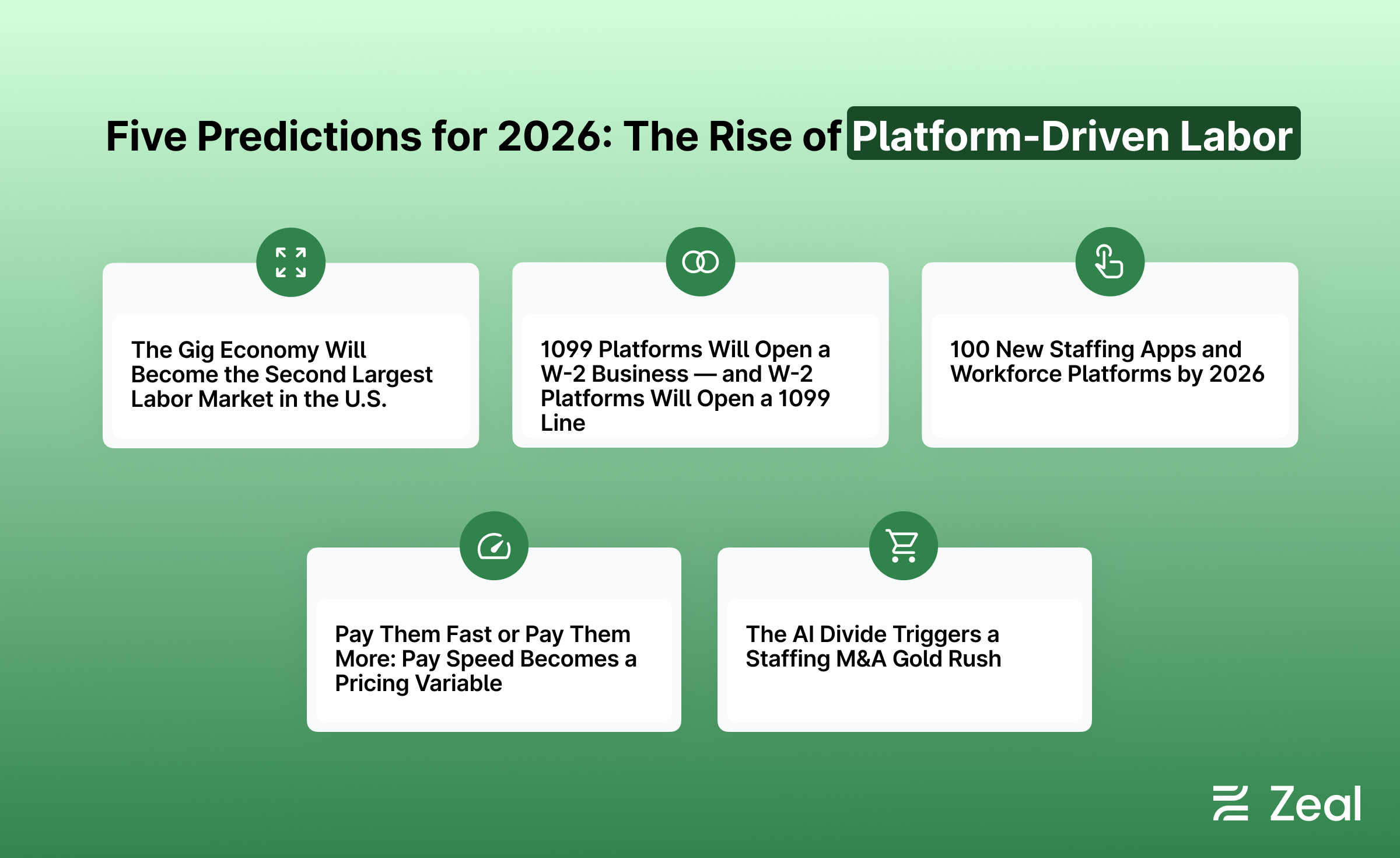
The gig economy has grown significantly. What began as a few platforms connecting freelancers with short-term projects is now a large part of the workforce. Many people choose gig work – driving for ride-sharing services, delivering food, or offering freelance services – for flexibility and autonomy. However, this growth has also created legal uncertainty.
Historically, the distinction between an employee and an independent contractor was clearer. Employees work under an employer's direct control, receiving regular wages and benefits. Independent contractors are self-employed, setting their own hours and managing their own businesses. The gig economy has blurred this distinction, leading to disputes over worker classification.
High-profile legal battles, such as those involving Uber and Lyft, have seen drivers challenge their classification as independent contractors, arguing for employee benefits. These cases highlight the core issue: who holds the power and control in these relationships? The stakes are high, involving billions in potential wage and benefit costs for companies and significant protections for workers.
The current system fails many. Gig workers often lack basic protections like minimum wage, unemployment insurance, and workers’ compensation. This has led to calls for reform at federal and state levels. It's a complex situation, but the conversation is gaining momentum.
DOL's New Independent Contractor Rule
The U.S. Department of Labor (DOL) proposed a new rule on January 10, 2024, to clarify who qualifies as an employee versus an independent contractor under federal wage and hour laws. This is about access to fundamental worker protections. The DOL's goal is to combat misclassification, where employers incorrectly label employees as independent contractors to avoid paying taxes and benefits.
The proposed rule focuses on six factors, drawing from long-standing case law: opportunity for profit or loss based on initiative and investment, the worker's investment in tools and equipment, employer control, the worker's skill and initiative, the permanence of the worker-employer relationship, and whether the work is integral to the employer’s business. Each factor is assessed, and no single factor is determinative.
The 'integral part' factor is particularly important. The DOL clarifies that a worker’s services are integral if they are essential to the employer’s core business operations. This shifts from previous guidance, which focused more on whether the work was “essential to the employer’s business.” The DOL aims to provide a more objective standard.
The Trump administration introduced a rule in 2021 emphasizing the 'economic realities' test, focusing on the worker's opportunity for profit and loss. The Biden administration's proposal rolls back some of those changes, giving more weight to the other five factors. This proposed rule is still under review and likely to face legal challenges.
This is a proposed rule, not a final regulation. It is currently subject to public comment, and the DOL could make changes before it is finalized. Businesses and workers should stay informed about developments, as this rule could significantly impact the gig economy.
The Modern Worker Empowerment Act
H.R.1319, the Modern Worker Empowerment Act, is a potential legislative solution to the gig worker classification problem. Introduced in February 2024, this bill aims to establish a new “portable benefits” system for independent workers. It is a complex piece of legislation with several provisions.
The bill's core idea is to create a system where gig workers can accrue benefits – like paid time off and health insurance – tied to the worker, not the employer. This addresses a major concern for gig workers lacking access to traditional employee benefits. The Act proposes a fund, supported by contributions from companies using independent contractors, to finance these portable benefits.
The bill also clarifies the definition of an independent contractor, establishing a three-part test considering the worker’s control over their work, their opportunity for profit or loss, and how integral the work is to the employer’s business. It aims to provide a more consistent and predictable standard for classification.
As of late April 2024, the bill is in its early stages. It has been referred to the House Committee on Education and the Workforce, but its future is uncertain. Roadblocks include opposition from business groups arguing the bill could increase labor costs and stifle innovation. It faces a tough fight.
Passage is uncertain. While the bill addresses legitimate concerns, it faces significant political hurdles. Monitoring its progress through Congress is important to understand the potential implications for both workers and companies.
State-Level Battles: A Patchwork of Laws
While the federal government grapples with gig worker classification, states are taking their own approaches. This has resulted in a patchwork of laws across the country, creating a complex legal environment for companies and workers.
California's Proposition 22 is a well-known example. Passed in 2020, Prop 22 exempts app-based transportation and delivery companies like Uber and Lyft from classifying their drivers as employees. It allows these companies to treat drivers as independent contractors while providing limited benefits, such as a minimum earnings guarantee and healthcare subsidies. Prop 22 has faced legal challenges, with some arguing it violates the California Constitution.
Massachusetts enacted a law in April 2024 creating a new classification for 'independent workers' – a category between employee and independent contractor. This classification provides some protections, such as the right to organize and bargain collectively, but does not grant full employee benefits. This is an attempt to find a middle ground.
New York is considering legislation on gig worker classification. Several bills have been proposed, ranging from establishing a new worker category to requiring companies to classify drivers as employees. The debate is ongoing, and the outcome is uncertain.
Here's a quick look at how some states are approaching the issue:
State | Approach | Current Status
California | Prop 22 – Independent Contractor Exemption | Facing legal challenges
Massachusetts | New 'Independent Worker' Classification | Law enacted April 2024
New York | Proposed Legislation – Various Bills | Under consideration
Texas | Generally favors independent contractor classification | No major changes recently
Illinois | Focus on enforcement of existing employee classification laws | Increased scrutiny of misclassification
Gig Worker Classification: A State-by-State Comparison (as of late 2026)
| State | Current Law (Summarized) | Key Provisions | Legal Challenges | Worker Protections |
|---|---|---|---|---|
| California | Utilizes the 'ABC' test established in *Dynamex Operations West, Inc. v. Superior Court* (2018), presuming workers are employees. | The ABC test requires a worker to be free from control, perform work outside the usual course of the business, and be customarily engaged in an independently established trade, occupation, or business. Proposition 22 (2020) created an exception for app-based transportation and delivery drivers. | Ongoing legal challenges regarding the scope of Proposition 22 and its potential conflict with existing labor laws. Further clarification expected following potential federal legislation. | Minimum wage, workers' compensation eligibility (if classified as an employee), unemployment insurance, and potential access to benefits like paid sick leave (depending on classification). |
| Massachusetts | Employs a multi-factor test, considering the level of control the company exerts over the worker. | Factors include the extent of control over the means and manner of work, the worker’s opportunity for profit or loss, the worker’s investment in the business, and the permanency of the relationship. Recent guidance emphasizes economic dependence. | Potential litigation surrounding the application of the multi-factor test to emerging gig economy platforms. Concerns about consistent enforcement. | Minimum wage, overtime pay (if classified as an employee), and access to unemployment insurance. Workers' compensation coverage is required for employees. |
| New York | Uses a 'control' test and an 'economic realities' test, examining the degree of control and the economic dependence of the worker. | The 'economic realities' test considers factors like the worker’s opportunity for profit or loss, whether the services are integral to the employer’s business, and the relative investment of the employer and worker. New York has been actively pursuing misclassification cases. | Legal disputes concerning the application of the economic realities test to various gig economy sectors. The state continues to refine its approach to enforcement. | Minimum wage, overtime pay (if classified as an employee), paid family leave, and workers' compensation coverage. Efforts to expand benefits access for gig workers are ongoing. |
| Texas | Generally favors independent contractor status, applying a common-law agency test focusing on the right to control. | The right to control refers to the employer’s ability to dictate not only *what* work is done, but *how* it is done. Texas has historically been less active in pursuing misclassification cases compared to other states. | Limited legal challenges specifically targeting gig worker classification. Focus remains on traditional employment relationships. | No statutory requirement for minimum wage or paid sick leave. Workers' compensation is generally not available to independent contractors. Unemployment benefits are also typically unavailable. |
| Florida | Applies a borrowing statute that can impute employer responsibility for workers' compensation purposes in certain situations. | Florida’s borrowing statute allows a business that contracts with an independent contractor to be held liable for workers' compensation benefits if the contractor is injured on the job and doesn’t have coverage. | Ongoing debate regarding the scope of the borrowing statute and its impact on businesses utilizing independent contractors. | Independent contractors are not eligible for unemployment benefits or state-mandated minimum wage. Workers' compensation coverage is limited, depending on the application of the borrowing statute. |
| Illinois | Utilizes a 10-factor test to determine worker classification, considering factors like behavioral control, financial control, and the relationship of the parties. | The 10-factor test assesses the degree of control the employer exercises over the worker, the extent of the worker’s investment, and the nature of the relationship. | Recent legal challenges have focused on the weight given to each factor in the 10-factor test, leading to some uncertainty in application. | Employees are entitled to minimum wage, overtime pay, and unemployment insurance. Independent contractors are generally not eligible for these protections. |
Illustrative comparison based on the article research brief. Verify current pricing, limits, and product details in the official docs before relying on it.
What 'Integral Part of the Business' Really Means
The DOL's emphasis on whether work is 'integral' to the employer’s business is proving to be a central point of contention. It’s a phrase that sounds straightforward, but the courts are still grappling with its precise meaning. Essentially, if a company couldn’t operate without a particular service, that service is likely integral.
For example, consider a delivery company. Without drivers, the company simply cannot deliver goods. Therefore, delivery drivers are likely performing integral work. However, consider a company that hires a cleaning service. While cleaning is important, the company could likely outsource that function or manage it internally without fundamentally altering its core business operations.
The courts are looking at whether the worker’s services are directly involved in producing the company’s primary product or service. A software developer working on a company’s core software platform is likely performing integral work. A marketing consultant providing occasional advice might not be.
This is where we'll see a lot of litigation. Companies will argue that their use of gig workers is not integral, while workers will argue the opposite. The outcome of these cases will shape the future of gig worker classification. It’s a gray area, and the interpretation will vary depending on the specific facts of each case.
Rights You Gain as an Employee
Being classified as an employee comes with a significant set of rights and protections that independent contractors typically lack. These protections are designed to ensure fair labor standards and provide a safety net for workers.
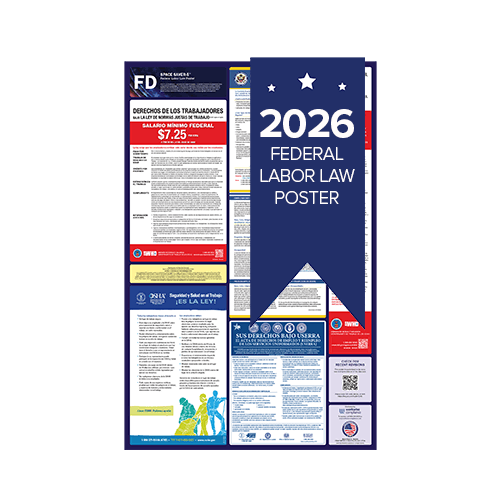
One of the most fundamental rights is the right to a minimum wage. As of April 2024, the federal minimum wage is $7.25 per hour, although many states and cities have higher minimum wages. Employees are also entitled to overtime pay – typically 1.5 times their regular rate – for hours worked over 40 in a workweek.
Employees are eligible for unemployment insurance benefits if they lose their job through no fault of their own. The amount of these benefits varies by state, but the average weekly benefit in the U.S. is around $400. They also have access to workers' compensation insurance, which covers medical expenses and lost wages due to work-related injuries.
Perhaps one of the most valuable benefits is access to employer-sponsored health insurance. Many employers offer health insurance plans to their employees, often covering a significant portion of the cost. Employees are also typically eligible for other benefits, such as paid time off, sick leave, and retirement plans.
Here’s a quick checklist:
• Minimum wage and overtime pay
• Unemployment insurance
• Workers’ compensation
• Employer-sponsored health insurance
• Paid time off and sick leave
• Protection against discrimination and harassment
Protecting Yourself: What Gig Workers Can Do
If you're a gig worker who believes you've been misclassified as an independent contractor, there are steps you can take to protect your rights. The first is to carefully document your working conditions. Keep records of your hours worked, earnings, expenses, and any control exerted by the company you're working for.
It's crucial to gather evidence that demonstrates an employer-employee relationship. This could include emails, text messages, or other communications that show the company dictating your work schedule, providing training, or controlling how you perform your tasks. You should also document any expenses you incur while performing work for the company.
If you're unsure about your rights, seeking legal counsel is a good idea. An attorney specializing in employment law can review your situation and advise you on the best course of action. Many attorneys offer free initial consultations.
You can also file a complaint with the Department of Labor. The DOL investigates potential misclassification cases and can take action to enforce wage and hour laws. You can find more information and file a complaint on the DOL’s website:
Here are some resources:
• U.S. Department of Labor:
• National Employment Law Association:
• Your state’s Department of Labor
Essential Resources for Navigating Gig Worker Classification in 2026
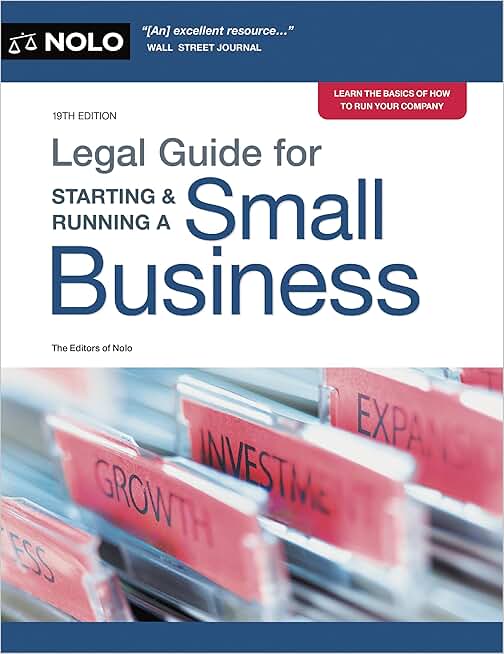
Covers essential legal aspects of business formation and operation. · Provides guidance on contracts, compliance, and dispute resolution. · Aims to help entrepreneurs navigate legal challenges.
This guide offers foundational legal knowledge essential for understanding business structures and operational requirements.

Simplifies complex tax concepts for independent contractors, sole proprietors, and LLCs. · Focuses on key tax obligations and strategies. · Presents information concisely for quick understanding.
This resource breaks down the tax implications of different business structures, crucial for gig workers managing their finances.

Provides a structured format for tracking income and expenses. · Includes space for detailed record-keeping. · Features a durable cover for long-term use.
An essential tool for meticulous financial record-keeping, vital for tax preparation and business analysis.

Offers a comprehensive, step-by-step approach to starting a business. · Covers legal requirements from inception to operation. · Designed to guide entrepreneurs through the initial stages.
This kit provides a structured legal roadmap for establishing and operating a small business, clarifying initial setup requirements.

Explores the business and ethical considerations of freelance legal practice. · Discusses the evolving landscape of legal work. · Offers insights into managing a freelance legal career.
While specific to legal professionals, its insights into the business and ethical aspects of freelance work are broadly applicable to gig economy participants.
As an Amazon Associate I earn from qualifying purchases. Prices may vary.
Looking Ahead: What to Expect
The future of gig worker classification remains uncertain. The DOL’s proposed rule and the Modern Worker Empowerment Act are both significant developments, but their ultimate impact is still unknown. We can expect continued legal battles and legislative efforts to address this issue.
It’s likely that states will continue to take the lead in regulating the gig economy, experimenting with different approaches to worker classification and benefits. This could lead to even more variation across the country, making it challenging for companies to operate nationally.
One thing is clear: gig workers need to stay informed about their rights and advocate for fair treatment. This is a rapidly evolving area of law, and workers must be proactive in protecting themselves. The fight for gig worker rights is far from over.

No comments yet. Be the first to share your thoughts!