

The 32-hour week
The 40-hour work week is a relic of 1940. Today, the 32-hour schedule is moving from a niche perk to a serious legislative debate. We are finally questioning if a century-old framework fits how we work now.
Senator Bernie Sanders has been a leading voice pushing for this change with his Thirty-Two Hour Workweek Act. The core argument behind the Act, and the broader movement, is simple: American workers are significantly more productive now than they were in 1940. According to the Act’s framing, we’re over 400 percent more productive, yet those gains haven't translated into proportional benefits for the workforce.
For decades, the 40-hour week felt immutable. It was the standard. But the nature of work has fundamentally changed. Automation, technology, and increased efficiency mean we’re capable of producing more in less time. The question now is whether we should adjust our work structures to reflect this reality, prioritizing work-life balance and employee well-being alongside output.
This isn’t about working less; it’s about working smarter. It's about recognizing that a well-rested, engaged workforce is often a more productive workforce. The current debate isn’t simply about cutting hours, but about redesigning work to maximize output and improve the lives of those doing the work.
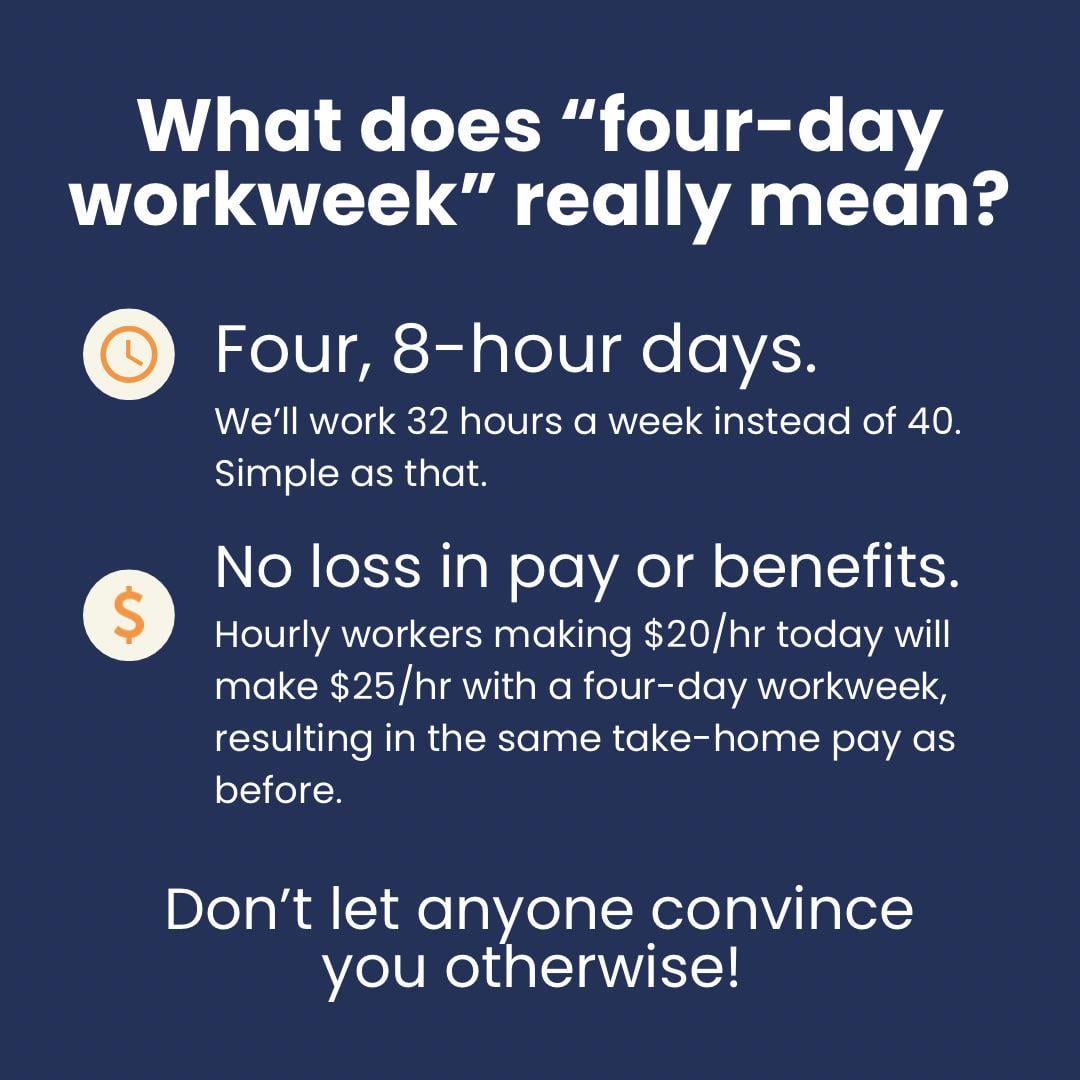
States weighing mandatory overtime
A few states are weighing bills that would trigger overtime pay after 32 hours. Most of these are in the early stages. Introduction doesn't guarantee passage; these bills still face committee reviews and floor votes.
As of late 2023 and early 2024, California has been a focal point. Multiple bills have been proposed aiming to reduce the standard work week and trigger overtime after 32 hours, but none have yet passed into law. The legislative debate is ongoing, with strong support from labor advocates and significant opposition from business groups. The California Chamber of Commerce, for example, has voiced concerns about the potential costs to employers.
New York is another state to watch closely. Similar to California, there has been active discussion and introduction of bills seeking a 32-hour work week with overtime provisions. However, these bills are largely stuck in committee at the moment. The political landscape in New York is complex, and the outcome remains uncertain.
Other states, like Maryland and Pennsylvania, have seen preliminary discussions and even some initial bill introductions, but activity has been less intense than in California and New York. It’s crucial to follow state-level legislative updates to stay informed about the latest developments. Resources like state legislature websites and news outlets specializing in labor law can be invaluable.
It’s also worth noting that the specific details of these proposed laws vary. Some bills focus solely on overtime pay after 32 hours, while others address broader issues like mandated shorter work weeks. This variability adds to the complexity of the situation.
States Considering or Implementing 32-Hour Work Week Policies (as of November 26, 2023)
| State | Bill Name (if applicable) | Current Status | Date of Last Action | Notes |
|---|---|---|---|---|
| California | AB 467 | Failed in Assembly Committee | August 15, 2023 | Would have required employers with over 500 employees to offer a 32-hour workweek with no loss in pay, but did not pass. |
| Maryland | HB0228 | Pre-filed | November 13, 2023 | This bill proposes establishing a task force to study the feasibility of a 32-hour workweek in the state. |
| New York | S6935 | Referred to Labor Committee | March 3, 2023 | This bill proposes a study on the feasibility of a four-day workweek. |
| Pennsylvania | HB1546 | Referred to Labor & Industry Committee | February 27, 2023 | Proposes a pilot program for a four-day workweek for certain employers. |
| Vermont | H.726 | Introduced | February 10, 2023 | Bill aims to create a grant program to support businesses experimenting with a four-day workweek. |
| Washington | SB 5785 | Died in Committee | March 10, 2023 | This bill aimed to establish a four-day workweek pilot program, but did not advance. |
Illustrative comparison based on the article research brief. Verify current pricing, limits, and product details in the official docs before relying on it.
New Jersey wage rules
New Jersey currently follows the federal Fair Labor Standards Act (FLSA) guidelines for overtime pay, but with some key differences. Generally, employees in New Jersey are entitled to overtime pay at a rate of 1.5 times their regular rate of pay for all hours worked over 40 in a workweek. The state’s Wage & Hour Compliance FAQs provide detailed information on these rules.
New Jersey has no 32-hour rule yet. If one passes, businesses will have to recalculate payroll and adjust shifts. Some might need to hire more staff to fill the gaps left by shorter individual schedules.
For employees, a 32-hour overtime rule would mean earning overtime pay sooner in the week. This could lead to increased earnings for some, especially those who regularly work more than 32 hours. It could also improve work-life balance, allowing employees more time for personal commitments and reducing burnout. The NJ.gov website provides resources for both employers and employees to understand their rights and obligations.
Employer concerns
Employers understandably have concerns about the potential impact of a 32-hour work week with mandatory overtime. The most frequently cited concern is the increased cost of labor. Paying overtime for hours worked beyond 32 would inevitably increase payroll expenses, particularly in industries with high labor demands.
Logistical difficulties are also a major worry. Restructuring work schedules to accommodate a shorter work week can be complex, especially in 24/7 operations like healthcare or emergency services. Maintaining adequate staffing levels while adhering to a 32-hour overtime rule could pose significant challenges. Some businesses might need to invest in new technologies or processes to optimize efficiency.
There's also the question of productivity. While proponents argue that a shorter work week can boost productivity, some employers fear the opposite – that reducing work hours will lead to a decrease in output. This is a valid concern, and the actual impact on productivity would likely vary depending on the industry and the specific nature of the work.
Legal challenges are almost certain. Opponents of these laws could argue that they infringe on employers’ rights to manage their businesses and that they violate principles of free enterprise. Lawsuits could focus on issues like due process, equal protection, and the constitutionality of mandating overtime rules. It’s likely these laws would face extensive litigation.
Productivity and morale
The potential benefits for employees are substantial. A 32-hour work week could lead to improved work-life balance, reducing stress and burnout. This, in turn, can boost morale and job satisfaction. Employees with more free time are likely to be healthier, happier, and more engaged in their work.
Rested people work better. A 2022 trial in the UK involving 61 companies found that 71% of employees reported lower levels of burnout, while company revenue actually rose by an average of 1.4%. When you aren't exhausted, you waste less time.
A shorter work week can also be a powerful tool for employee recruitment and retention. In a competitive job market, offering a four-day work week can give companies a significant advantage in attracting and retaining top talent. It signals that the company values its employees and is committed to their well-being.
Beyond individual benefits, a broader shift towards shorter work weeks could have positive societal impacts, such as reduced carbon emissions (due to less commuting) and increased opportunities for leisure and community involvement.
Industries Most Affected
Certain industries would be more significantly impacted by a 32-hour overtime rule than others. Healthcare is a prime example. Hospitals and healthcare facilities operate 24/7, and maintaining adequate staffing levels is already a major challenge. A 32-hour overtime rule would likely require significant adjustments to scheduling and staffing models.
Retail is another industry that would feel the impact. Retail businesses often rely on part-time employees and variable schedules. A 32-hour overtime rule could increase labor costs and require retailers to rethink their staffing strategies. The need to cover peak hours and weekends would be particularly challenging.
Manufacturing could also face significant challenges. Many manufacturing operations require continuous production, and a 32-hour overtime rule could disrupt production schedules and increase costs. Automation and increased efficiency would become even more critical in this sector.
Industries with high customer service demands, such as call centers and hospitality, would also need to adapt. Ensuring adequate coverage and maintaining service levels while adhering to a 32-hour overtime rule would require careful planning and potentially increased staffing.
In your industry, would a 4-day work week with mandatory overtime after 32 hours be feasible?
As more states consider legislation around the 4-day work week and mandatory overtime thresholds, we want to hear from workers on the ground. How realistic is this shift for your line of work? Vote below and share your perspective in the comments.
No comments yet. Be the first to share your thoughts!